If you’re a lawyer or general counsel, you’ve probably noticed the same patterns in your contracts: payment terms that always need tightening, liability caps that never match your risk profile, termination clauses that creep beyond what’s acceptable.
You already know your positions — but unless they’re written down, applied consistently, and accessible to everyone reviewing contracts, they’re just tribal knowledge. That’s a risk.
What a Playbook Does
A contract review playbook is simply a written, structured set of rules for reviewing agreements.
It spells out your organisation’s preferred positions and red lines, so any lawyer on your team can apply them without guesswork.
A strong playbook will:
- Enforce consistency – Whether a partner, associate, or secondee is reviewing, the same standards apply.
- Cut review time – No more rethinking positions you’ve decided a dozen times before.
- Reduce risk – Weak clauses don’t sneak through because someone didn’t know the policy.
- Support delegation – Junior team members can handle more reviews without constant escalation.
Playbooks are living documents — they evolve with your business, your risk appetite, and changes in law or regulation.
Building One That Works
At a minimum, a useful playbook should include:
- Clause categories (payment, termination, liability, indemnities, governing law, etc.)
- Your standard position for each clause
- Fallback positions you’ll accept in negotiation
- Escalation triggers — the point where you need senior review or client sign-off
Many GCs start with a simple table in Word or Excel. Over time, it’s worth moving to a system that lets you update rules centrally and apply them automatically.
Where Technology Fits
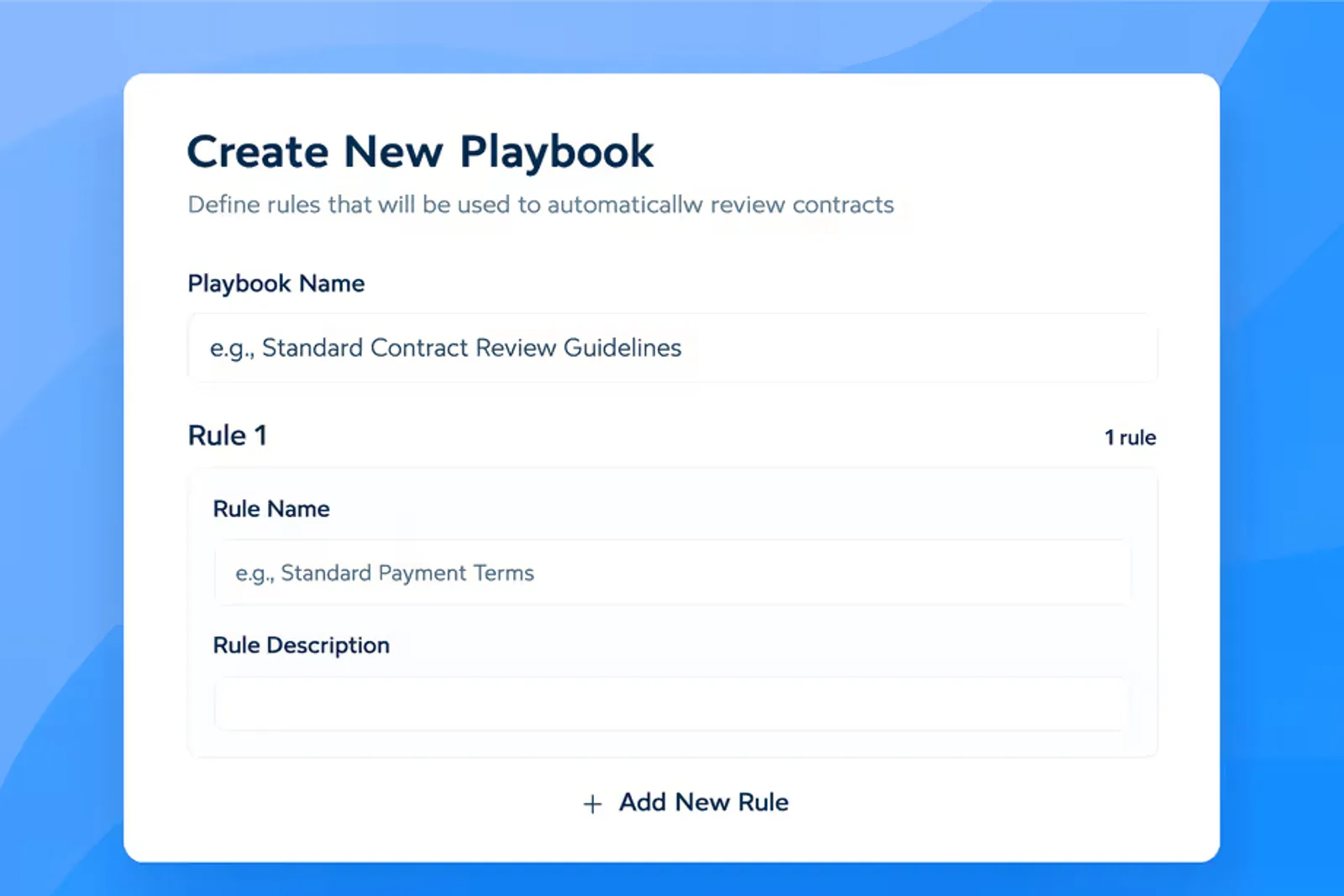
You don’t need software to create a playbook — but software can make it a lot more powerful. With goHeather, for example, you can set up your rules once and have every contract checked against them automatically. That means your playbook isn’t just a reference document; it’s part of your review process, every single time.
Whether you use a spreadsheet, a PDF, or a tool like goHeather, the key is to get your positions out of your head and into a playbook. The sooner you do, the sooner you stop fighting the same battles twice.
Review any Contract With AI Before you Sign it