FALL 2026 UPDATE
goHeather is now a full legal AI. Create documents, review documents, research the law.
Try For Free Now




Every team in a company now has access to AI tools that would have seemed speculative two years ago. Sales uses them to draft outreach. Marketing uses them to research competitors. Legal uses them to review contracts. Finance uses them to model scenarios. The question is no longer whether AI belongs in your stack. It is which tools belong where, and which ones are good enough to trust with real work.
This is a practical guide to the AI tools worth paying attention to in 2026, organized by what they actually do well. Some are general-purpose. Some are specialized. All of them have earned a place on this list by being useful to real teams, not just impressive in a demo.
Claude, built by Anthropic, is the tool that tends to win when the work is writing, analysis, or reasoning through a long document. Its 200,000-token context window means you can drop in an entire contract portfolio, a quarterly earnings call transcript, or a 60-page policy document and get a coherent, accurate response instead of a hallucinated summary.
Claude Opus 4.6, released earlier this year, leads most independent coding benchmarks and produces fewer hallucinations than competing models. For business teams, that reliability matters more than raw speed. When you ask Claude to summarize a board deck, draft a memo, or compare two versions of a policy, the output tends to need less editing than alternatives.
What sets Claude apart for business use in 2026 is its connector ecosystem. Through Anthropic's Model Context Protocol (MCP), Claude plugs directly into the tools your team already runs on, not as a clunky integration, but as a native participant in the workflow. Connect Claude to HubSpot and it can pull CRM data, enrich contacts, draft outreach informed by deal context, and surface pipeline insights without leaving the conversation. Connect it to Webflow and it can create and update CMS content, run SEO audits, and manage site structure from a single prompt. Connect it to Figma and it can read design files, extract component specs, and bridge the gap between design and development.
The connector list now runs to over 38 workplace tools, including Slack, Notion, Google Drive, Jira, Salesforce, and Snowflake. Claude is not just an AI you paste things into. It is an AI that sits inside your existing stack and works with your data where it lives.
Best for: Long-document analysis, writing and editing, research synthesis, code generation, cross-tool workflows via connectors, and any task where accuracy and nuance matter more than flashy features. Read how Claude compares to goHeather.
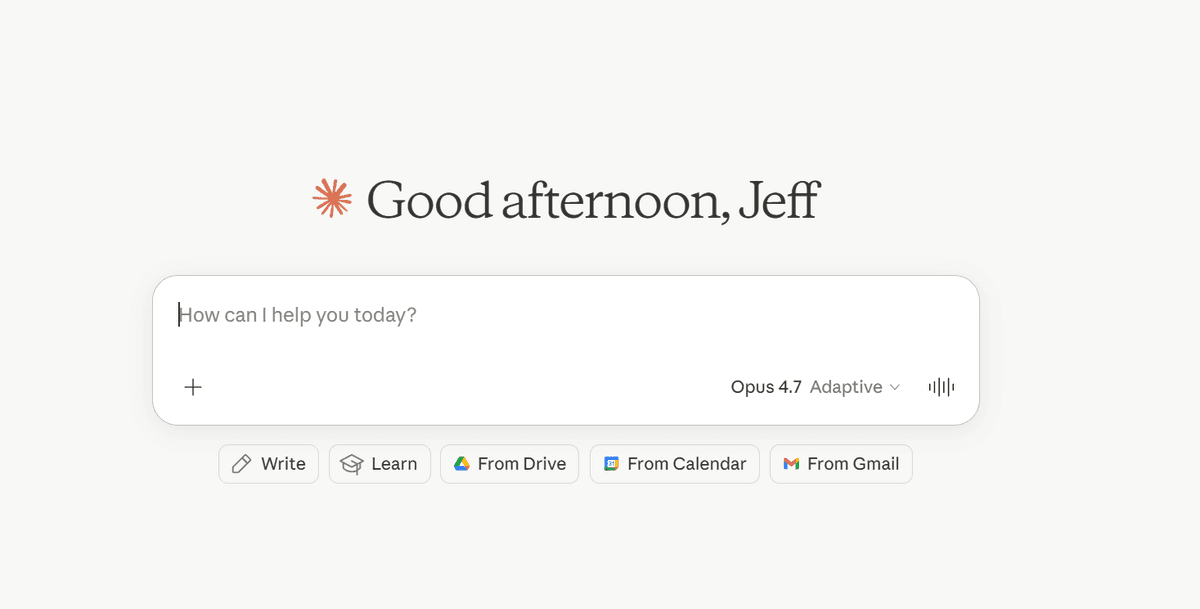
ChatGPT from OpenAI remains the most widely adopted AI tool in the world, and for good reason. It is the Swiss Army knife, capable across writing, coding, image generation, data analysis, web browsing, and file processing. GPT-5's agentic capabilities, introduced in 2026, let it plan and execute multi-step tasks across tools with less hand-holding than any previous version.
ChatGPT's plugin and GPT ecosystem gives it reach that no other platform matches yet. Need a tool that can generate a slide deck, analyze a spreadsheet, search the web for competitive intel, and draft a follow-up email, all in one session? ChatGPT handles that workflow more fluidly than most alternatives.
Best for: Teams with diverse, cross-functional needs spanning writing, image generation, data analysis, real-time research, and rapid prototyping across formats.
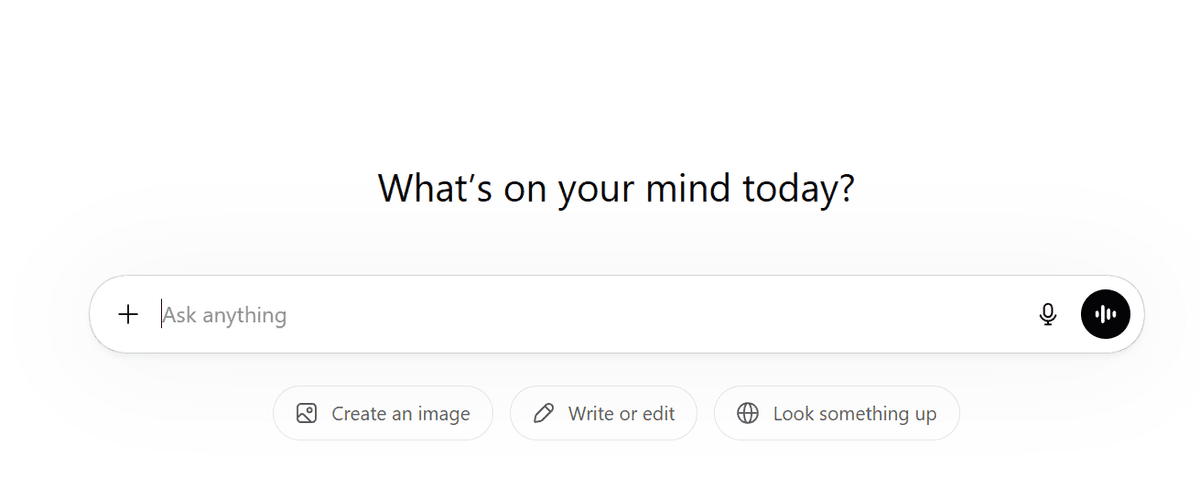
Gemini from Google is the natural pick for any organization already running on Google Workspace. It lives inside Gmail, Docs, Sheets, and Slides natively, which means adoption is less about onboarding a new tool and more about turning on a feature your team already has access to.
Gemini's standout technical advantage is context. With over one million tokens of context window on its latest models, it can process inputs that would choke other platforms: full codebases, massive datasets, long regulatory filings. Its multimodal capabilities (text, image, video, audio) are also the most mature in the market, making it a strong fit for teams that work across media types.
Best for: Google Workspace-native teams, multimodal workflows, and any use case that benefits from enormous context windows.
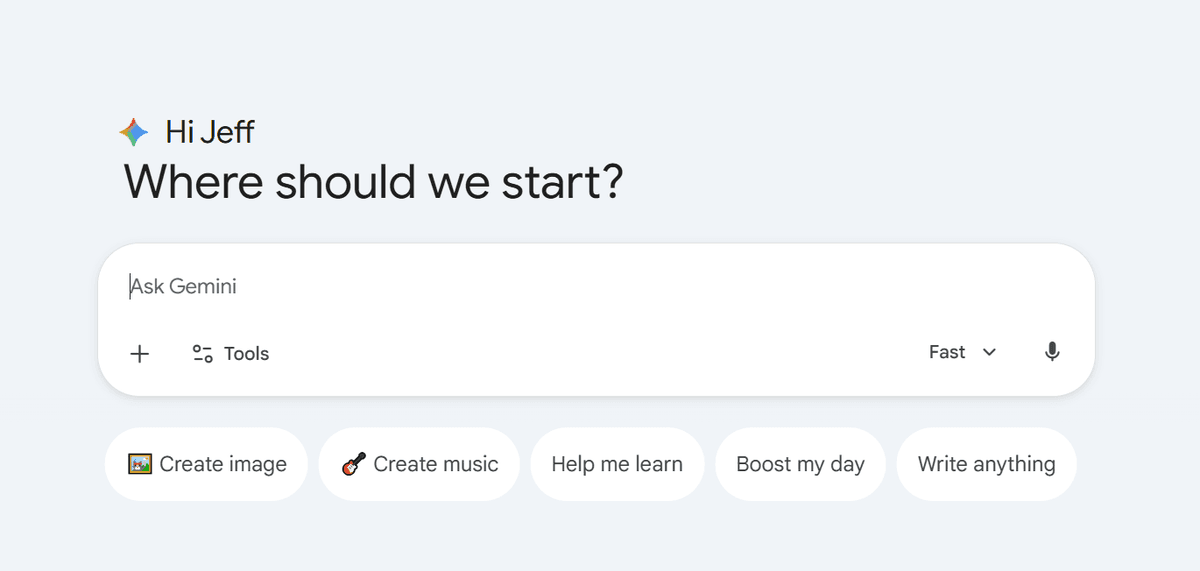
goHeather is the only legal technology platform on this list, and it earns its place by solving a problem every growing business hits: contracts take too long, cost too much, and create risk when nobody reviews them carefully.
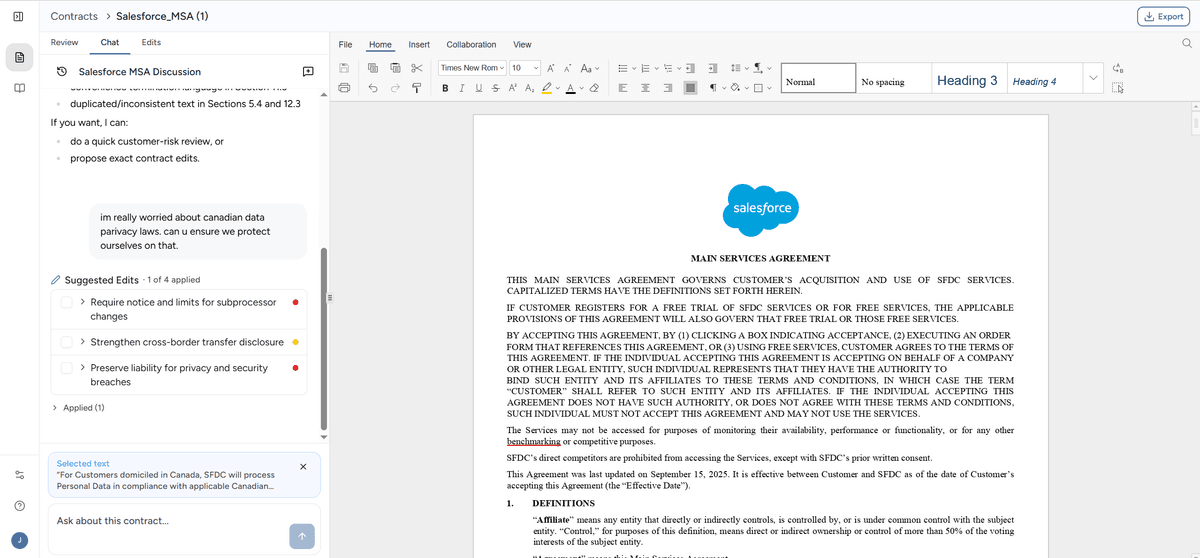
Built by lawyers, goHeather handles three core workflows. Contract review: upload any agreement, apply a playbook of rules your team has defined, and get a clause-by-clause analysis (Pass, Fail, or Not Applicable) in minutes instead of days. Contract negotiation: when a counterparty sends back redlines, goHeather checks every change against your playbook and suggests responses, so sales and procurement teams can self-serve on routine deals and escalate only the exceptions. Contract drafting: generate jurisdiction-specific NDAs, employment agreements, service contracts, and more through a structured interview. No template hunting, no copy-paste errors.
The platform works inside a native web editor or as a Microsoft Word add-in, which means your team reviews and redlines where they already work. Pricing starts at $99 per month, a fraction of what enterprise CLMs charge, making serious contract workflows accessible to companies that have been priced out of the category until now.
Best for: In-house legal teams, sales and procurement teams handling routine contracts, and any growing business that needs lawyer-trained contract review, negotiation, and drafting without the enterprise price tag. Try goHeather free
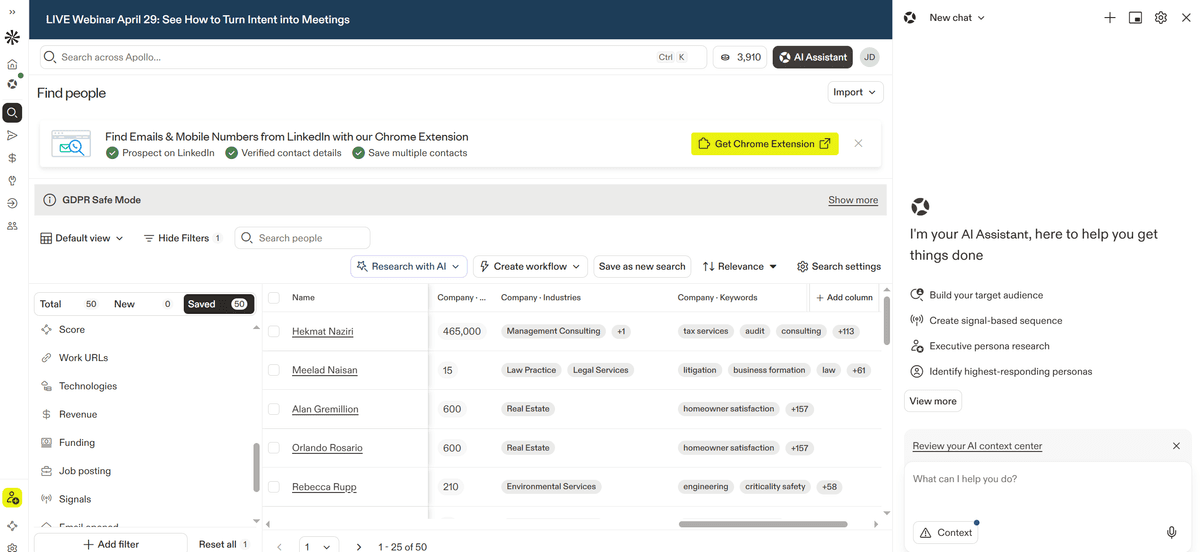
Apollo is the AI-native sales intelligence and go-to-market platform that has quietly become essential infrastructure for revenue teams. With a database of over 210 million contacts and 30 million companies, Apollo gives sales, marketing, and RevOps teams the prospecting and outreach engine that used to require three or four separate tools.
The 2026 headline is Apollo's AI Assistant, an agentic layer embedded directly into the platform that prospects, researches, enriches, sequences, and reports without switching tools. Unlike standalone AI that tells you what to do, Apollo's assistant actually does the work: it generates personalized talking points from LinkedIn profiles and company news, writes email copy and subject lines, scores leads based on engagement signals and buying intent, and after a call, records it, generates a summary, and creates follow-up tasks automatically.
G2 recognized Apollo as the top AI-native sales intelligence platform in its 2026 Best Software Awards, and the numbers support it. Teams using Apollo's AI features report measurably shorter prospecting cycles and higher response rates on outbound sequences.
Best for: Sales and RevOps teams that need prospecting, lead enrichment, outbound sequencing, and meeting intelligence in one platform, particularly teams scaling outbound without scaling headcount.
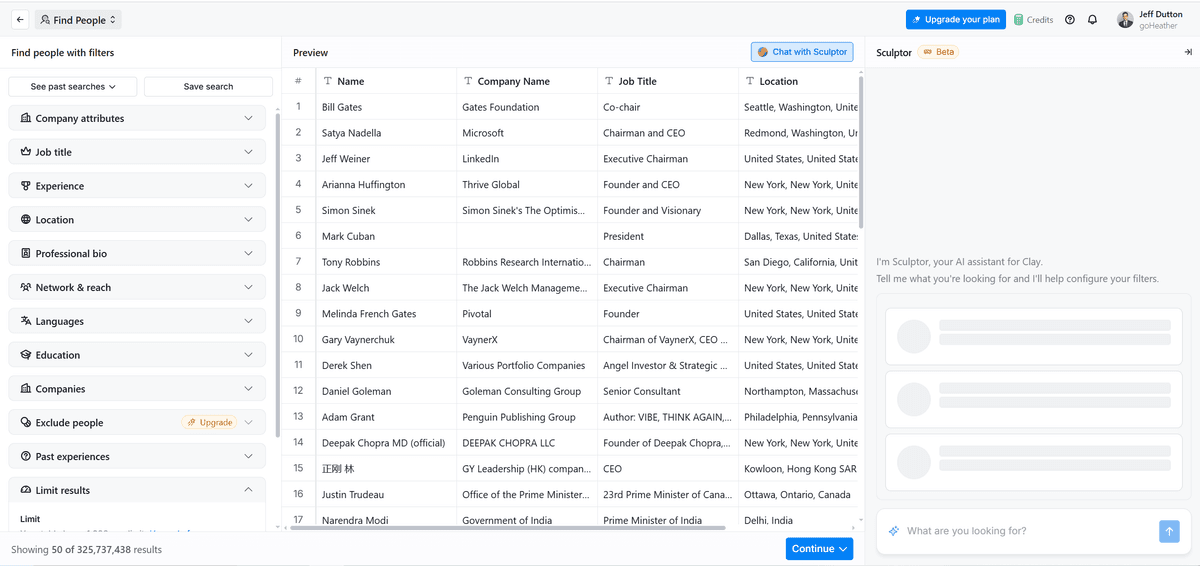
Clay is the data enrichment and workflow platform that GTM teams use when Apollo's built-in data is not enough and they need to pull from everywhere. Clay connects to over 150 data providers and waterfalls through them automatically. If one provider cannot find an email or phone number, Clay queries the next, then the next, until it gets a match. The result is enrichment coverage in the high 80s where single-provider tools sit in the low 40s.
Clay's AI research agent, Claygent, goes beyond structured databases. It scrapes publicly available web data to find specific details like a company's office locations, a founder's background, or a recent product launch, and writes that context directly into outbound sequences. Combined with intent signals (job changes, website visits, social mentions), Clay lets teams build hyper-targeted lists and trigger outreach at exactly the right moment.
More than 300,000 GTM teams now use Clay, and the platform's credit-based pricing means you pay for the enrichment you actually use rather than a flat seat license.
Best for: High-volume outbound teams that need deep, multi-source data enrichment, AI-powered lead research, and automated prospecting workflows that go beyond what any single database offers.
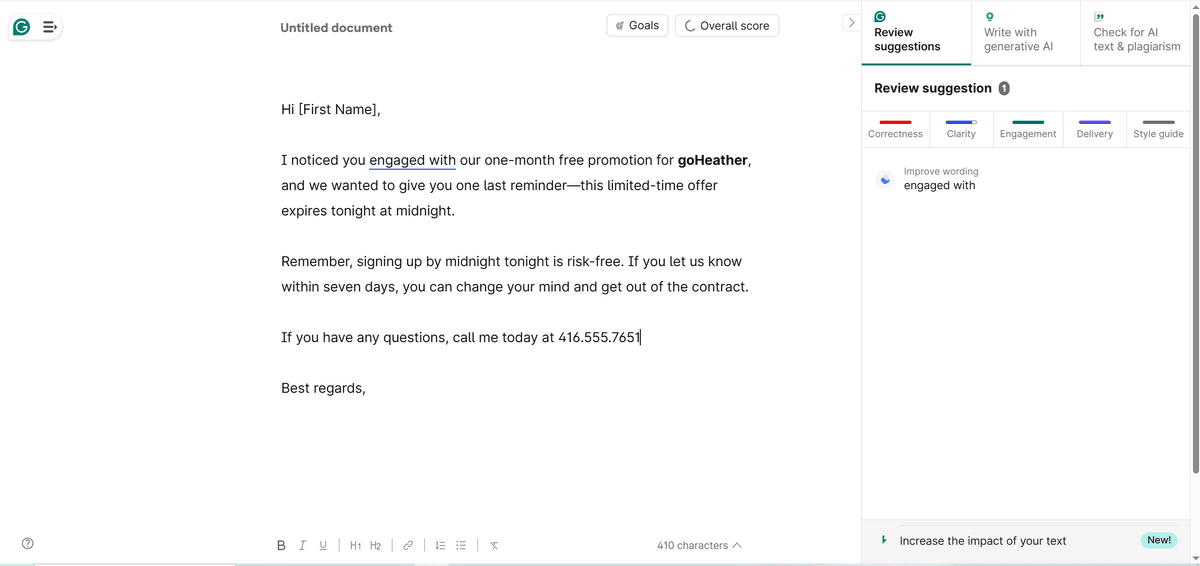
Grammarly has evolved well past spell-check. In 2026, it is a real-time AI writing assistant that lives inside virtually every text field your team touches, from email clients and browsers to Slack, Google Docs, and Microsoft Word. It catches tone mismatches, unclear phrasing, and off-brand language before anyone hits send.
The business tier adds the features that matter for teams: brand tone profiles that enforce your company's voice across every writer, custom style guides that flag industry jargon or banned terminology automatically, and analytics dashboards that show writing quality trends across the organization. When team-specific acronyms or internal terms appear, Grammarly surfaces definitions, related documents, and key contacts inline.
Grammarly's generative AI features now handle drafting, rewriting, and brainstorming directly inside any text field. The 2026 Rewrite function uses a smarter contextual engine, and the platform's AI agents provide substantive feedback on argument quality, source evaluation, and how messages will land with specific audiences.
Best for: Any team that writes (sales, marketing, support, leadership) and needs consistent quality, brand voice enforcement, and AI writing assistance embedded in every tool they already use.
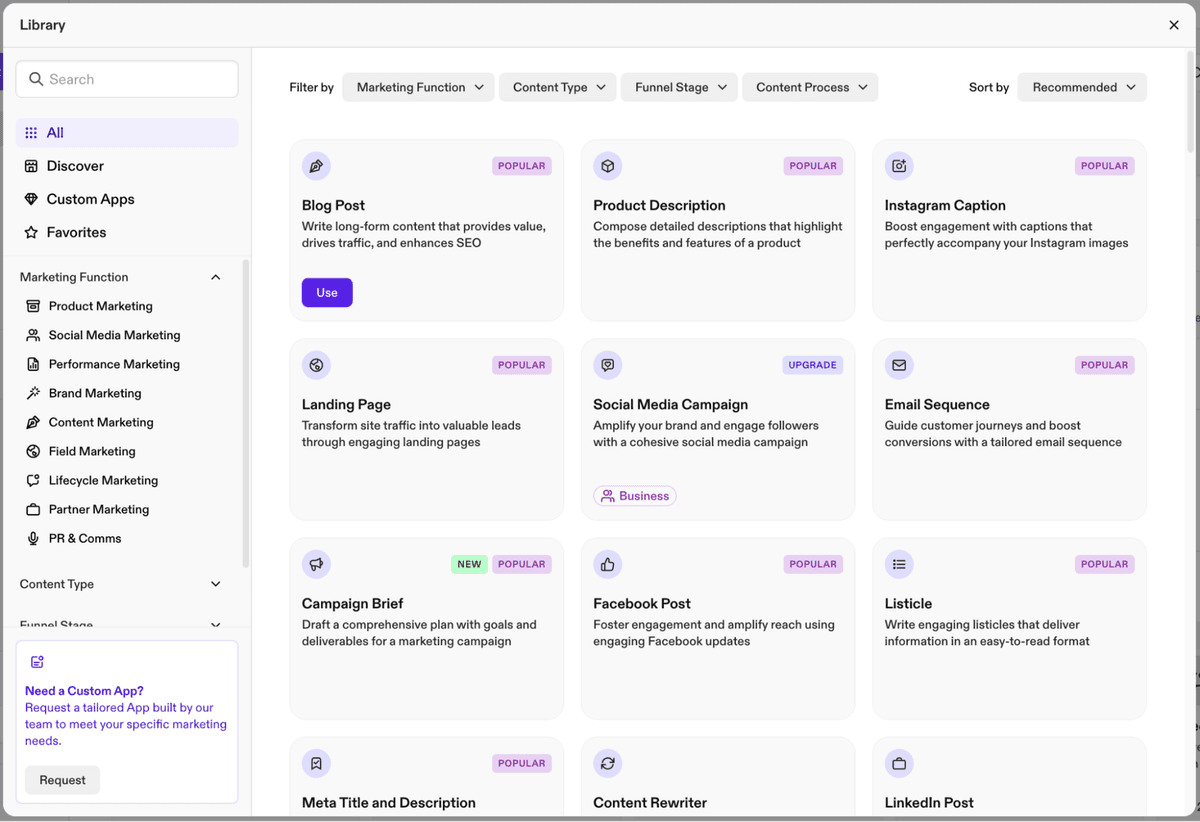
Jasper is the AI marketing platform built specifically for marketing teams that need to produce content at scale without losing brand control. Where ChatGPT and Claude are general-purpose, Jasper is purpose-built: it understands campaigns, channels, brand guidelines, and the full content lifecycle from strategy to published asset.
The platform's 100+ specialized AI agents handle research, content creation, and optimization with built-in brand governance. Jasper IQ, the shared intelligence layer, centralizes your brand voice, audience profiles, and business context so every agent and workflow produces on-brand output from the start. Content Pipelines automate the journey from brief to published piece, connecting planning to execution across teams, regions, and channels.
Jasper Grid, the orchestration layer launched in 2026, lets marketing leaders turn strategy into structured, repeatable workflows that run reliably at scale. It is particularly valuable for global teams managing localized campaigns across dozens of markets simultaneously.
Best for: Marketing teams producing high volumes of brand-controlled content across multiple channels, regions, and campaigns, especially teams that have outgrown general-purpose AI and need purpose-built marketing infrastructure.
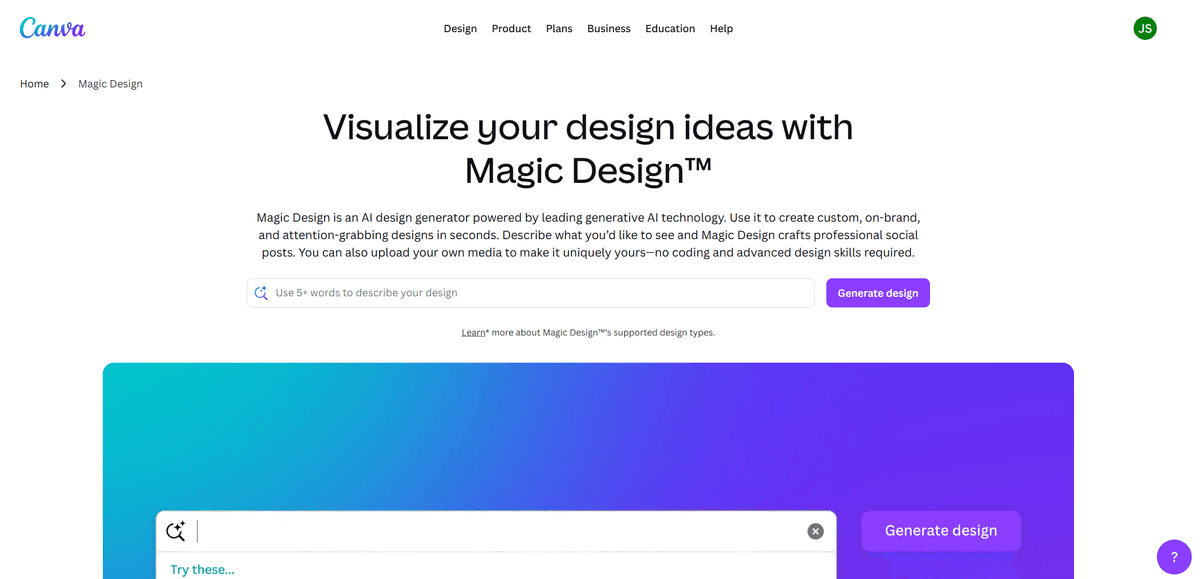
Canva Magic Design turns a text prompt into a collection of polished, on-brand designs in seconds. For business teams without dedicated designers, or design teams that need to move faster, it eliminates the blank-canvas problem entirely. Describe what you need, and Magic Design generates presentation decks, social posts, marketing materials, and print assets ready to refine and publish.
The broader Magic Studio suite now includes Magic Layers, launched in March 2026, which breaks AI-generated images into fully editable components so designs stay flexible after generation. Canva AI 2.0 introduces conversational design, an AI partner that works alongside you in the editor from first concept to final asset, learning your brand's fonts, colors, and rules so every output stays consistent.
The business case is hard to argue with: 85 percent of Fortune 500 companies now use Canva, and their own data shows 85 percent of marketers save at least four hours per week with AI design tools. Canva's AI features have been used over five billion times since launch.
Best for: Marketing, sales, and operations teams that need professional visual assets (presentations, social content, ads, internal materials) without waiting on a design queue or learning Adobe.
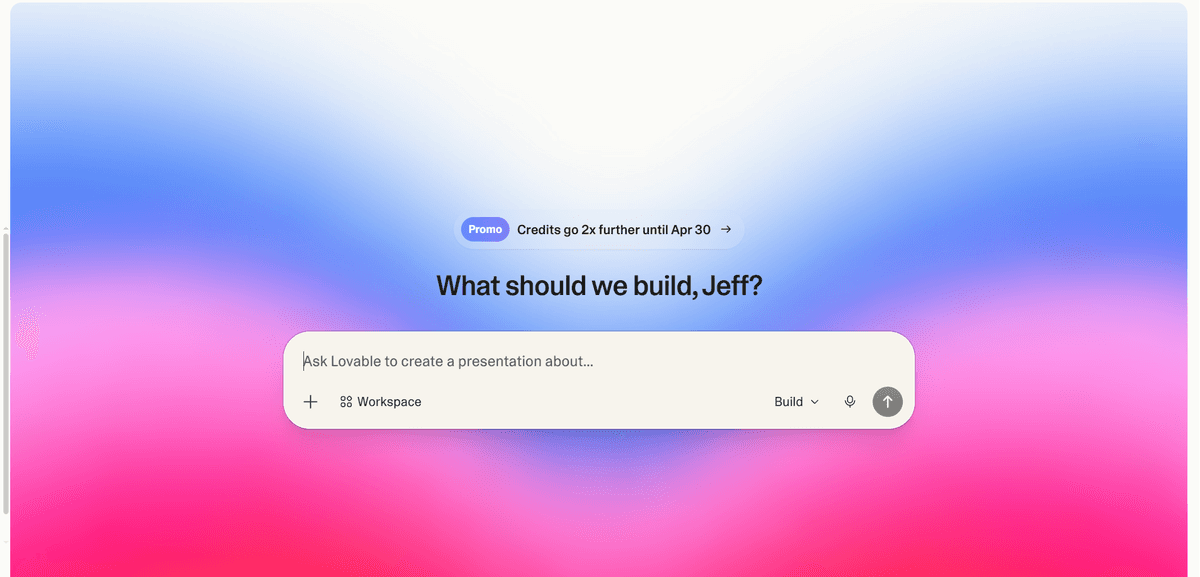
Lovable is the AI app builder that turns a plain-language description into a full-stack application. React and TypeScript frontend, Supabase-powered backend, database, authentication, and deployment pipeline, all from a single prompt. For business teams with internal tool needs, MVPs to validate, or customer-facing apps to prototype, Lovable compresses weeks of development into hours.
The component library ships with shadcn/ui, so outputs look professional out of the box: proper loading states, error boundaries, responsive layouts. Since March 2026, Lovable has expanded beyond app building into general-purpose business tasks like data analysis, business intelligence dashboards, presentation decks, and marketing workflows, making it increasingly useful for non-technical teams as well.
Enterprise customers include Klarna, Uber, and Zendesk. Lovable's credit-based pricing lets teams start free and scale usage as projects grow, with paid tiers unlocking private projects, custom domains, and production-ready deployment features.
Best for: Founders, product teams, and operations leads who need internal tools, prototypes, or full-stack applications built fast without hiring a developer or waiting on an engineering sprint.
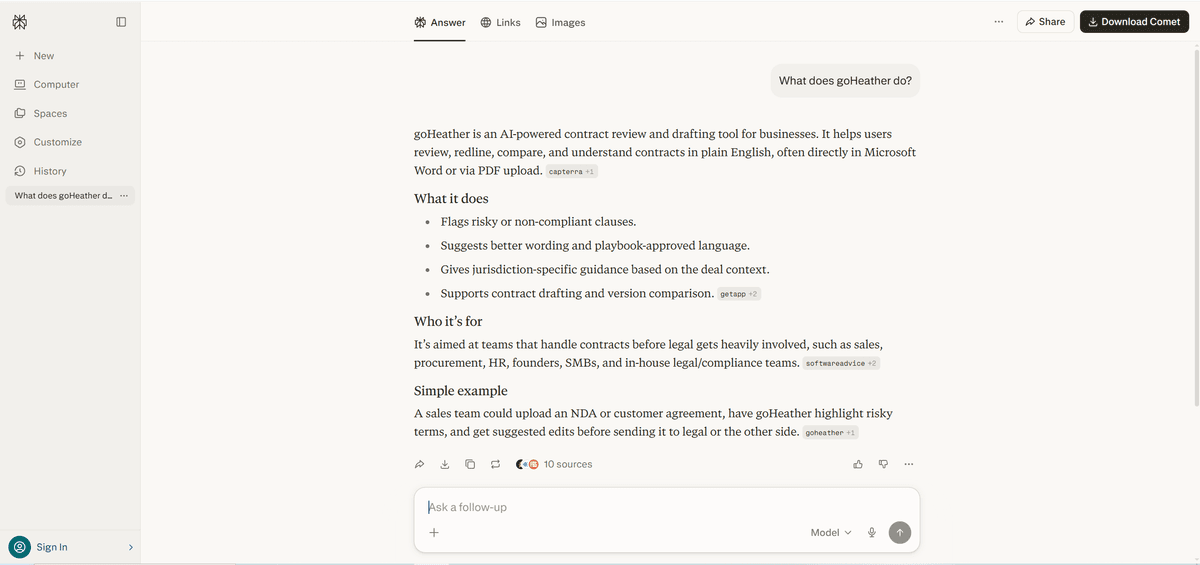
Perplexity has carved out a distinct lane: AI-powered research with sources. While ChatGPT and Claude can search the web, Perplexity was built for it. Its Deep Research feature searches across hundreds of sources, reads full articles, cross-references data, flags contradictions, and produces a structured report with citations, all in two to five minutes.
For business teams, this changes how competitive analysis, market sizing, and due diligence get done. Tasks that used to take a product manager or analyst two hours now take thirty minutes with higher source coverage. The Model Council feature, launched in early 2026, lets users compare outputs from multiple AI models side by side, which is useful when you want a second opinion on a complex question.
Best for: Competitive research, market analysis, due diligence, and any task where sourced, cited answers matter more than creative generation.
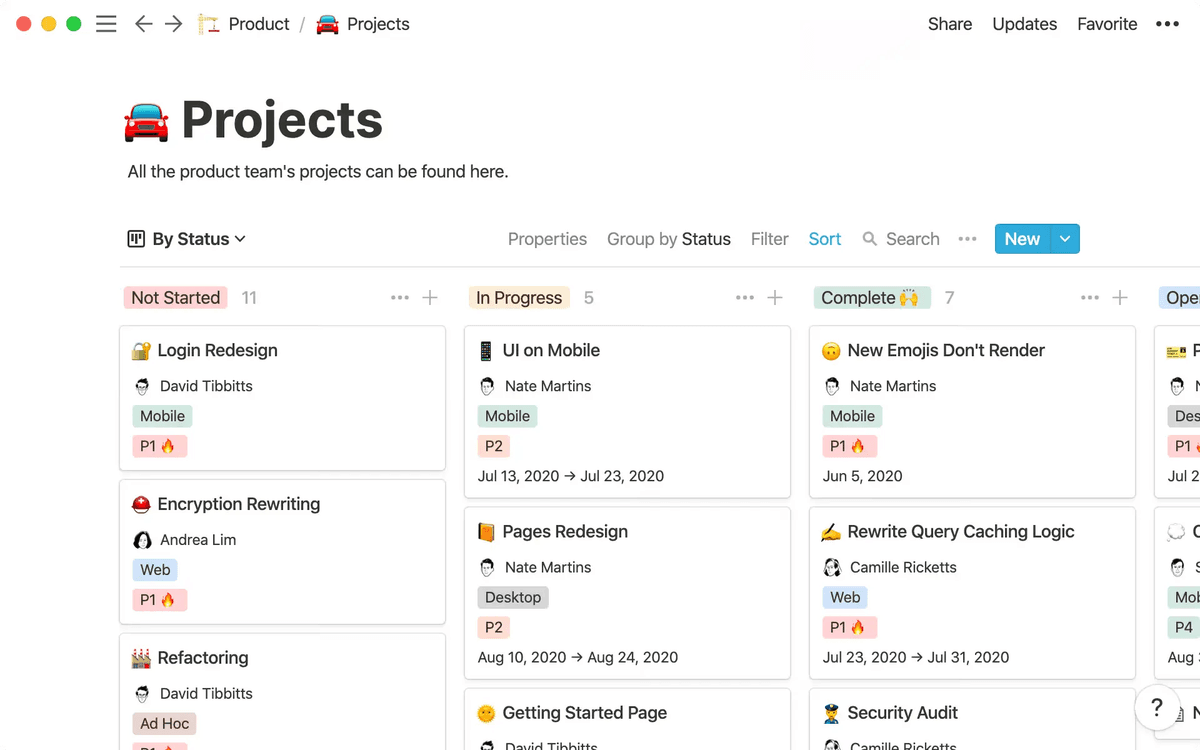
Notion AI turns Notion from a workspace into a system that works on your behalf. The headline feature in 2026 is Notion Agents, custom automations that run on schedules or triggers, compiling daily feedback from Slack and support tickets, posting weekly project updates, or triaging helpdesk requests without anyone clicking a button.
For teams already using Notion as their knowledge base, the AI layer is transformative. Ask Notion questions across your entire workspace (meeting notes, project docs, wikis, databases) and get answers grounded in your own content, not the public internet. AI Autofill keeps databases current by automatically enriching, extracting, and categorizing information across rows.
Best for: Teams already on Notion that want AI-powered search, automated workflows, and agents that keep their workspace current without manual upkeep.
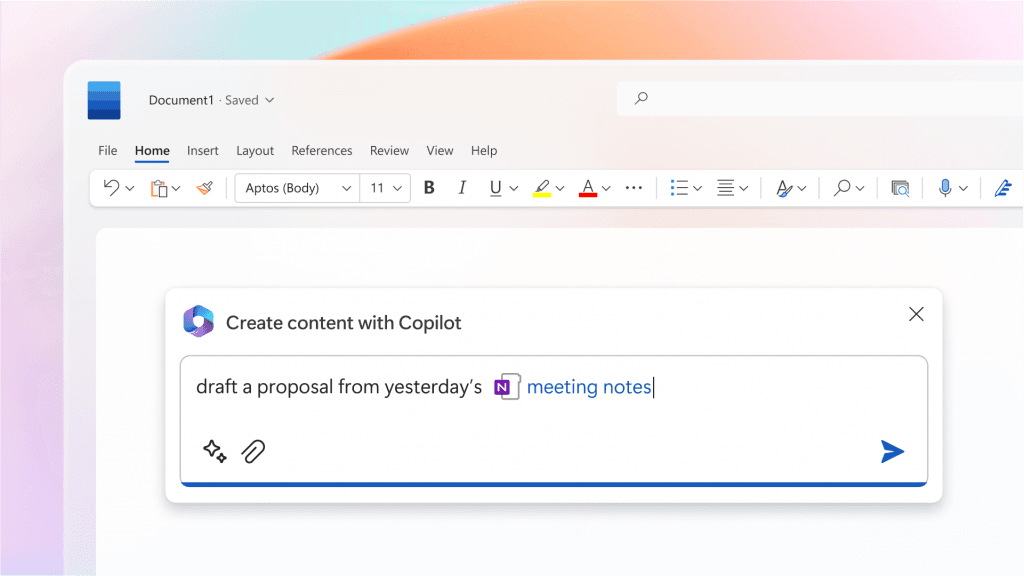
Microsoft Copilot is the enterprise default for organizations running on Microsoft 365. It sits inside Word, Excel, PowerPoint, Outlook, and Teams, drafting documents, summarizing email threads, generating presentations from outlines, and analyzing spreadsheet data using natural language.
Copilot's strength is distribution. It does not require your team to learn a new tool or switch contexts. For large organizations with existing Microsoft licensing, the incremental cost is modest and the adoption curve is nearly flat. The trade-off is flexibility. Copilot is tightly scoped to Microsoft's ecosystem and less capable as a general-purpose reasoning engine than Claude or ChatGPT.
Best for: Microsoft 365-native organizations that want AI embedded in the tools their teams already use every day.
No single AI tool covers everything a business needs, and trying to force one platform into every role is a mistake. The practical approach is to match tools to workflows.
For writing, analysis, and cross-tool workflows that pull from your CRM, design files, and CMS, Claude's connector ecosystem is unmatched. For breadth and versatility across formats, ChatGPT is hard to beat. For Google-native teams, Gemini is the path of least resistance. For contracts (review, negotiation, and drafting), goHeather delivers lawyer-trained workflows at a price point that makes the category accessible for the first time. For outbound sales and prospecting, Apollo and Clay each serve different scales of ambition. For polished writing across every channel, Grammarly. For scaled marketing content with brand governance, Jasper. For visual assets without a design team, Canva Magic Design. For building apps and internal tools without engineers, Lovable. For sourced research, Perplexity. For workspace automation, Notion AI. For the Microsoft ecosystem, Copilot.
The companies getting the most out of AI in 2026 are not the ones using one tool for everything. They are the ones that picked the right tool for each job and gave their teams permission to actually use them.
Jeff Dutton is a lawyer who advises on technology, corporate, privacy, commercial, employment and real estate law.
Jeff founded his own small law firm, Dutton Law, in 2016 (and merged it with a larger firm in 2019). Before that, Jeff was a prosecutor and a commercial law lawyer at a national boutique law firm.
Jeffrey is a frequent lecturer on legal matters and has been published in newspapers and trade journals. In addition, Jeff was the editor and co-author of a leading employment law text for lawyers for many years.
Education:
Western University, BA (2009)
University of Ottawa, Faculty of Law, JD (2012)
Get the latest contract tips, updates, and exclusive content straight to your inbox. Subscribe now and never miss out on what's new in contract law or at goHeather!
Our AI sifts through each clause, identifying potential risks. This enables us to provide quick yet comprehensive contract reviews, equipping you with the legal information you need to make informed decisions.
USA
1 Sansome St., Suite 1400
San Francisco, CA 94104
United States
International
10 Dundas St. East, Suite 1002
Toronto, ON M5B 2G9
Canada