FALL 2026 UPDATE
goHeather is now a full legal AI. Create documents, review documents, research the law.
Book a Demo



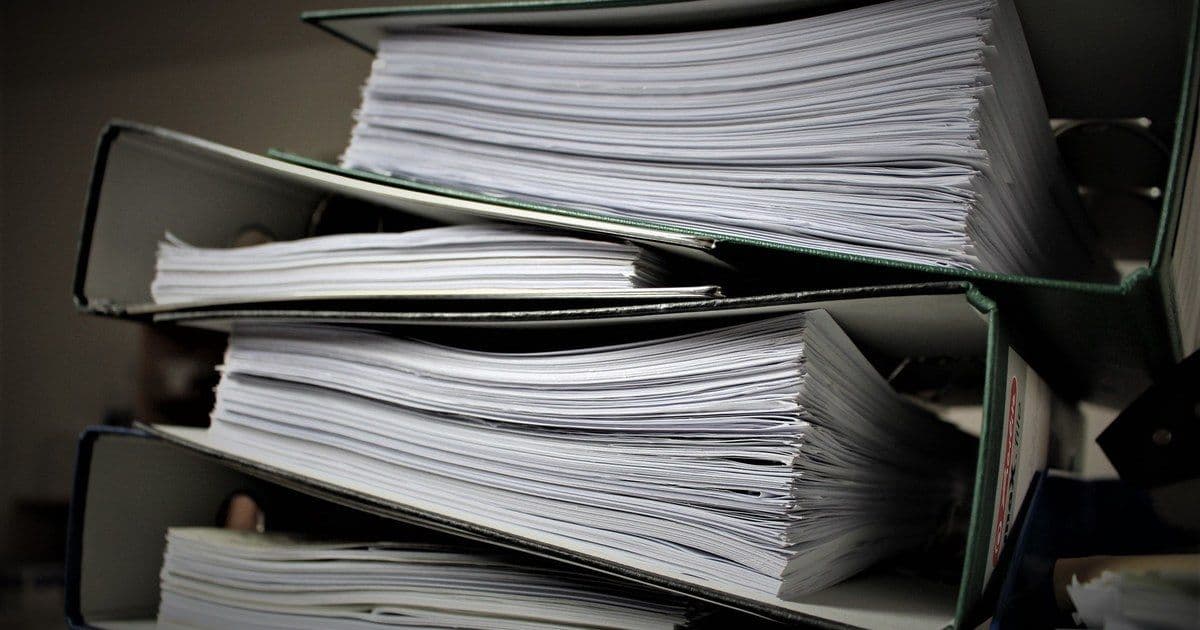
A vendor pushes an updated data processing addendum out to forty customers on the same day, or a franchisor sends the same amendment to two hundred locations, or an insurer mails the same rider to every policyholder in a book of business. Each of those documents is supposed to be identical, or close to it, and the instinct is to review every copy the way you'd review any other contract: open it, read start to finish, sign off. That instinct is what clogs the queue every time one of these rollouts lands on a review team's desk.
Reading two hundred copies of the same document front to back either takes days you don't have, or it turns into skimming, and skimming a document that's supposed to match a template is worse than not reading it at all, because you're not checking against anything specific, you're just hoping nothing looks wrong. Attention doesn't hold up evenly across two hundred near-identical pages, and the deviation that matters is just as likely to sit in copy 140 as copy 4. None of this is a rounding error at scale. Research from World Commerce & Contracting puts the average value a business loses to poor contract management at almost 9% of annual revenue, with the worst performers losing 15% or more, and a batch full of unnoticed one-off deviations is the kind of leak that adds up to that number.
The workflow that scales starts with picking a single reference copy: the version whoever owns the rollout signed off as correct, not whichever copy happens to be sitting in your inbox. Confirm that with the person who approved it before you treat it as the baseline. Every other document in the batch then gets compared against that one file, not against each other and not read on its own. Anything that matches word for word clears without a full read. Anything that differs gets pulled out for someone to look at.
That's a narrower question than a normal contract review, which is why it moves faster: instead of judging whether the contract is acceptable on its own terms, you're only checking whether it matches the one you already decided was acceptable. Word's built-in compare tool can do a version of this for two files at a time, but it wasn't built for precision at this kind of volume: if a single letter inside a word changes, Word's comparison can show the whole word as deleted and reinserted, making a trivial edit look bigger than it is and a real one easy to miss in the noise. Doing that pairwise across dozens or hundreds of files stops being a shortcut and turns into its own project.
Some fields are allowed to vary on purpose: the site address, the named contact, the price on a given account, the effective date. Decide which fields are the allowed variables before you start comparing, then check those separately and treat every other sentence as fixed text that should be identical across the batch. The batches that cause real trouble mix both kinds of variance in the same document, because deciding by eye whether a difference is an allowed field or an actual deviation is the slow part, and it's the part most likely to get rushed once you're a hundred documents in.
The same principle applies inside a single contract, not just across a batch of them. Pick one file everyone agrees is correct, then check everything else against it instead of re-deciding what's acceptable each time. That's also the fix for exhibits that quietly drift out of sync with what legal actually approved in the body of the agreement, a problem worth reading on its own.
Checking two hundred documents against one reference file for a set of allowed variables is exactly the kind of repetitive comparison a first-pass AI review handles reasonably well: it can flag which copies in a batch differ from the reference and where, so a person isn't the one opening all two hundred files just to find out. It won't tell you whether a given deviation is fine to accept, and it won't make the batch safe just because most copies matched. Someone still has to spot-check a handful of the ones it clears, the same way you'd spot-check any automated pass. If you're already running contracts through an AI first pass, pointing it at whether a document matches your reference copy is a narrower, cheaper version of the same check.
Track how many documents in a batch cleared on a match against the baseline versus how many got pulled for a full read. If that escalation rate normally sits under 10% and a new batch comes in at 60%, that's telling you something about the batch, maybe the wrong template went out, or the file you picked as the baseline wasn't the one actually approved. If escalation creeps toward 100% every time, the shortcut isn't earning its keep, and the fix is the baseline step, not reading every document by hand again.
Try goHeather free and see how a first pass compares a contract against your own reference language before you decide what needs a full read.
This is legal information, not legal advice; consult a lawyer for legal advice.
Jeff Dutton is a lawyer who advises on technology, corporate, privacy, commercial, employment and real estate law.
Jeff founded his own small law firm, Dutton Law, in 2016 (and merged it with a larger firm in 2019). Before that, Jeff was a prosecutor and a commercial law lawyer at a national boutique law firm.
Jeffrey is a frequent lecturer on legal matters and has been published in newspapers and trade journals. In addition, Jeff was the editor and co-author of a leading employment law text for lawyers for many years.
Education:
Western University, BA (2009)
University of Ottawa, Faculty of Law, JD (2012)
Get the latest contract tips, updates, and exclusive content straight to your inbox. Subscribe now and never miss out on what's new in contract law or at goHeather!
Our AI sifts through each clause, identifying potential risks. This enables us to provide quick yet comprehensive contract reviews, equipping you with the legal information you need to make informed decisions.
USA
1 Sansome St., Suite 1400
San Francisco, CA 94104
United States
International
10 Dundas St. East, Suite 1002
Toronto, ON M5B 2G9
Canada